When an air conditioner is running, but the room still feels warm, the problem can range from a simple thermostat setting to a serious mechanical failure. South Florida’s long cooling season can make even small airflow or equipment issues noticeable.
Not every cooling problem means the entire AC system needs to be replaced. Checking a few basic items can help identify the likely cause. However, refrigerant, electrical, and compressor problems require professional diagnosis and repair.
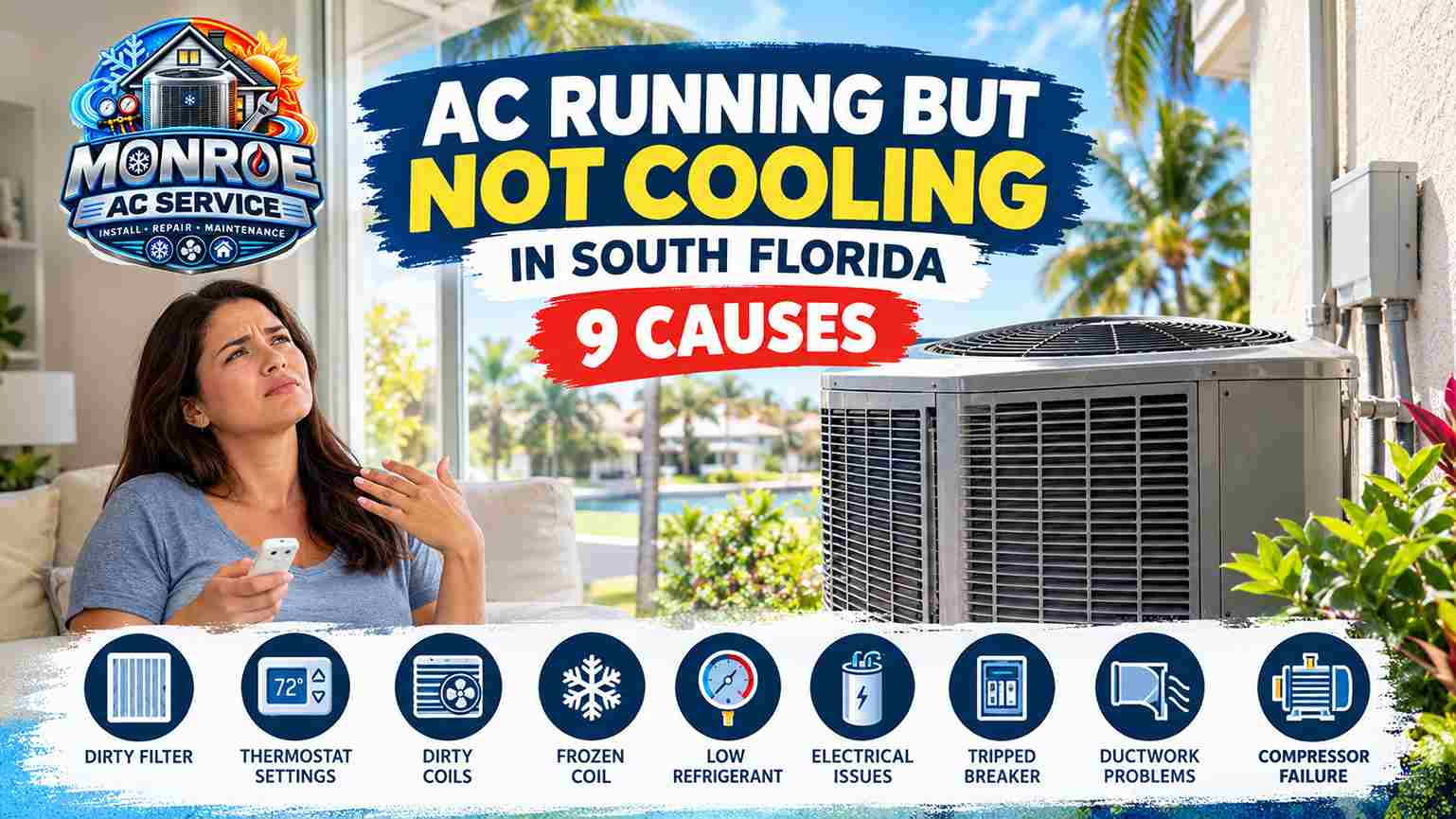
If your AC is running but not cooling, these nine problems are worth knowing.
1. Dirty or Clogged Air Filter
A dirty air filter is one of the easiest problems to overlook. As dust and debris build up on the filter, airflow through the system becomes restricted. Reduced airflow can make the system struggle to move enough cool air through the home and may contribute to an evaporator coil freezing.
Check the filter regularly. Disposable filters should be replaced according to their condition and manufacturer instructions, while reusable filters can be cleaned when appropriate.
2. Incorrect Thermostat Settings
Before assuming there is a mechanical failure, check the thermostat. It should be set to Cool, with the fan usually set to Auto so the blower runs during active cooling.
A fan set to On can continue moving air after the cooling cycle stops, which may make the air feel less cool between cycles. Also check that the thermostat is reading the indoor temperature correctly.
3. Dirty Outdoor Condenser Coil
The outdoor condenser unit releases heat from the home. When dirt, leaves, grass, or other debris collect around the condenser coil, heat transfer can become less efficient.
Keep the area around the outdoor unit clear. If the coil is heavily soiled, professional cleaning can restore proper heat transfer.
4. Frozen Evaporator Coil
An evaporator coil can freeze when airflow is restricted or when the system has a refrigerant problem. A layer of ice prevents the coil from absorbing heat properly, so the AC may keep running while delivering little or no cool air.
If you see ice on the indoor unit or refrigerant lines, turn off cooling and allow the ice to thaw. Do not remove the ice by force. Because freezing is usually a symptom of another problem, the underlying cause should be identified before normal operation continues.
5. Low or Leaking Refrigerant
Air conditioners rely on the correct refrigerant charge to transfer heat. If refrigerant is low because of a leak, the system may struggle to cool the home, run for long periods, or produce warm air.
Low refrigerant should not be treated as a simple refill issue. A qualified technician can check the system, locate a leak when one is present, and restore the charge according to the equipment requirements.
6. Failed Capacitor or Electrical Component
The outdoor AC unit depends on electrical components to start and operate the compressor and fan. A failed capacitor or another electrical fault can prevent the outdoor unit from running even though the indoor blower continues to operate.
Electrical components should be tested and replaced by a qualified professional because AC equipment contains high-voltage components.
7. Tripped Circuit Breaker
Central AC systems may have separate electrical circuits for different parts of the equipment. If the outdoor unit loses power, the indoor blower may continue running while the system fails to produce cool air.
Check the electrical panel for an obvious tripped AC breaker. If it trips again after being reset, do not keep resetting it. Repeated trips can indicate an electrical issue or equipment fault that needs professional attention.
8. Leaking or Blocked Ductwork
Your AC can produce cold air and still fail to cool the home properly if that air is lost before it reaches the rooms. Damaged, disconnected, or poorly sealed ductwork can allow conditioned air to escape, while leaks can draw warm air into the system.
Blocked return grilles and closed supply vents can also reduce airflow. Duct problems in hot attic spaces can be especially noticeable.
9. Compressor or Major System Failure
The compressor is one of the most important components in a central air conditioning system. It circulates refrigerant through the system so heat can be removed from the indoor air.
If the compressor fails, the AC may appear to be running because the indoor fan is operating, but the home may not cool properly. However, a compressor that does not start does not automatically mean the compressor itself has failed. Electrical components, controls, and other problems can cause similar symptoms.
Professional diagnosis is important before replacing a major component.
When Should You Call an AC Professional?
Some checks are reasonable for homeowners, such as verifying thermostat settings, checking the filter, keeping vents open, and making sure the outdoor unit is not surrounded by debris.
Professional service is recommended when the system repeatedly freezes, the breaker keeps tripping, the outdoor unit will not start, refrigerant may be leaking, unusual electrical sounds are present, or the AC continues running without cooling after basic checks.
A technician can test airflow, electrical components, refrigerant conditions, controls, and other components to identify the actual cause. Professional AC troubleshooting can help determine whether the problem involves airflow, refrigeration, electrical components, or a major system failure.
How to Prevent AC Cooling Problems
Regular maintenance can reduce the chance of unexpected cooling problems. Replace or clean the air filter as needed, keep the outdoor unit clear of debris, and avoid blocking supply and return vents.
Professional maintenance can also identify worn electrical components, restricted airflow, dirty coils, drainage concerns, and other problems before they become major repairs.
Get Reliable Help When Your AC Stops Cooling
An AC running but not cooling can be caused by something as simple as a dirty filter or thermostat setting, but it can also point to refrigerant, electrical, airflow, or compressor problems. Knowing which checks are safe to perform yourself and when professional diagnosis is needed can help prevent unnecessary damage and restore comfort sooner.
For homeowners who need dependable HVAC assistance, Monroe AC Service provides AC services for cooling systems that are not performing properly. When basic troubleshooting does not solve the problem, professional AC repairs can help address the underlying issue and get the system back to proper operation.
Frequently Asked Questions
Why is my AC running but not cooling?
Common causes include a dirty filter, incorrect thermostat settings, dirty condenser coils, a frozen evaporator coil, low refrigerant, electrical problems, duct issues, or compressor trouble.
Can a dirty air filter make my AC stop cooling?
Yes. A severely clogged filter can restrict airflow, reduce cooling performance, and contribute to an evaporator coil freezing.
Why is my outdoor AC unit not running?
Possible causes include a tripped breaker, failed capacitor, electrical problem, control issue, or compressor problem. A professional diagnosis can determine the exact cause.
Should I keep running an AC that has ice on it?
It is generally best to stop cooling and allow the ice to thaw rather than continuing to operate the system. Because freezing usually has an underlying cause, professional inspection may be necessary.
How often should an AC be serviced?
Regular maintenance is important, especially for systems that operate heavily in hot climates. Filter care should be performed more frequently, while professional maintenance should follow the equipment manufacturer’s recommendations and the system’s operating needs.